The Hidden Cost of the AI Boom: Why Natural Gas Infrastructure is Facing a Financial and Logistical Reckoning

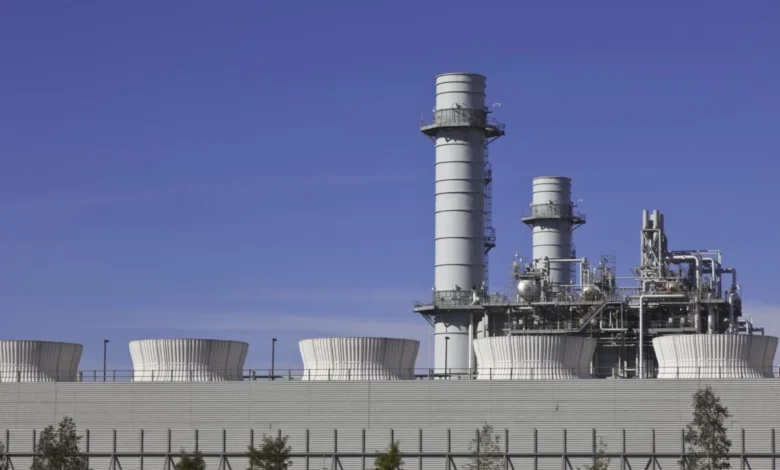
The rapid proliferation of artificial intelligence and the massive computational infrastructure required to support it have triggered a seismic shift in the global energy landscape. Tech giants, led by industry titans such as Microsoft and Meta, have increasingly pivoted toward natural gas as the primary fuel source for their burgeoning data center empires. However, this strategic embrace of fossil fuels is encountering significant friction. According to a recent report from BloombergNEF, the capital expenditure required to construct combined cycle gas turbine (CCGT) power plants has surged by 66% over the past two years, signaling a potential bottleneck for the AI industry’s expansion plans.
The Escalating Economics of Power Generation
As of early 2026, the financial barrier to entry for building new gas-fired power infrastructure has shifted dramatically. In 2023, the cost to develop a CCGT facility stood at approximately $1,500 per kilowatt of generating capacity. By late 2025, that figure had climbed to $2,157 per kilowatt. This 66% increase is not merely a reflection of fluctuating fuel prices—which, counterintuitively, have remained relatively stable in the United States despite geopolitical instability in Iran—but rather a consequence of an overheating construction and equipment market.
The surge in costs is compounded by significant timeline delays. Developers are reporting that the duration required to bring a new facility from planning to operational status has extended by 23% compared to historical averages. These delays are driven by a convergence of factors, including supply chain bottlenecks, labor shortages in specialized engineering fields, and an unprecedented scramble for critical hardware.
A Supply Chain in Crisis: The Turbine Bottleneck
At the heart of the current crisis is a severe shortage of industrial-grade gas turbines. These complex machines, which can account for up to 30% of the total cost of a new power plant, are currently subject to massive price inflation. Market data indicates that by the conclusion of 2026, the price of these turbines is expected to be 195% higher than 2019 levels.
The manufacturing process for high-efficiency gas turbines is notoriously difficult to scale. Unlike modular software or mass-produced consumer electronics, these turbines require precision engineering, advanced metallurgical components, and specialized testing facilities. Manufacturers are currently unable to keep pace with the hyper-accelerated demand from data center developers. Consequently, project timelines for new installations are being pushed into the early 2030s, creating a "waitlist" effect that threatens to stall the growth of hyperscale data centers that are already in the pipeline.
The Data Center Energy Demand Forecast
The scale of the energy challenge is difficult to overstate. Data centers are currently one of the most aggressive drivers of electricity demand globally. As of early 2026, data center energy consumption in the United States is estimated at 40 gigawatts. Projections from industry analysts suggest this demand will balloon to 106 gigawatts by 2035—a nearly 300% increase from current levels.
This growth is being driven by the physical expansion of facility footprints. Currently, only 10% of operational data centers operate at a capacity of 50 megawatts or larger. Within the next decade, however, industry standards are expected to shift, with the average facility size exceeding 100 megawatts. This transition to "megafacilities" means that every new project requires a level of grid commitment that utilities have struggled to accommodate, forcing tech companies to seek independent, self-contained power solutions.
Political Pressure and Public Backlash
The strategy of "bringing your own power"—a directive championed by the Trump administration to reduce the burden on public utility grids—has created a complex socio-political dynamic. While this approach is intended to decentralize the power supply and insulate the tech sector from grid instability, it has inadvertently fueled public animosity.

In many regions, the public is growing increasingly vocal in its opposition to the development of massive, private fossil fuel power plants situated near residential areas or sensitive ecosystems. The issue is exacerbated by the tendency of utilities to socialize the costs of upgrading regional grid infrastructure, passing the financial burden onto retail customers while the benefits of the new power plants are privatized by tech firms. This has led to a growing "NIMBY" (Not In My Backyard) movement, where local communities are challenging the environmental impact, noise pollution, and water consumption associated with these massive gas-fired facilities.
A Shift in Strategy: Alternatives to Natural Gas
While the industry remains heavily reliant on natural gas, the mounting costs and logistical hurdles are forcing a reconsideration of long-term energy strategies. A notable example of this shift is the approach being pioneered by Google and other firms that are exploring diversified energy portfolios.
Instead of relying solely on the constant, high-output nature of gas turbines, some companies are experimenting with the integration of renewable energy sources paired with long-duration energy storage (LDES). Technologies such as iron-air batteries, which can discharge electricity over periods as long as 100 hours, offer a potential path to grid reliability without the volatile costs associated with fossil fuel plant construction.
Unlike gas turbines, the cost trajectory for solar photovoltaics and battery storage systems has remained downward, following the principles of Wright’s Law, which suggests that costs decline as production volume increases. For tech companies looking to hedge against the rising costs of traditional thermal power, these renewable-plus-storage models are becoming increasingly attractive from both a financial and a public relations perspective.
Broader Implications for the Global Economy
The collision between the AI revolution and the physical realities of energy infrastructure represents a fundamental test for the next decade of industrial growth. If the cost of building power capacity continues to accelerate, the economics of AI model training and deployment may undergo a forced correction.
Economists warn that the current reliance on "high-cost, high-speed" construction to meet the immediate needs of AI may lead to "stranded assets" if the technology landscape shifts or if energy prices eventually stabilize in ways that favor decentralized renewables. Furthermore, the reliance on natural gas complicates the environmental, social, and governance (ESG) commitments that these companies have made to their shareholders and regulators.
In the short term, the tech sector is in a race against time. The urgency to secure compute power has necessitated an "all-of-the-above" energy strategy that, for now, prioritizes speed over long-term cost efficiency. However, as the 66% increase in construction costs demonstrates, the market is beginning to impose a penalty on this approach. The next several years will likely see a move toward more sophisticated energy management, including potential investments in nuclear small modular reactors (SMRs) or massive regional microgrids, as companies seek to break free from the volatility of the current gas-turbine-dominated market.
Ultimately, the transition toward a more sustainable and economically viable power model is no longer a matter of corporate policy, but an operational necessity. As the wait times for critical infrastructure stretch into the next decade, the companies that can successfully decouple their computational growth from traditional, high-cost fossil fuel power will likely possess a distinct competitive advantage in the race for AI supremacy. The challenge remains to bridge the gap between today’s immediate power needs and a future where energy is not just abundant, but affordable and resilient.
Related posts: